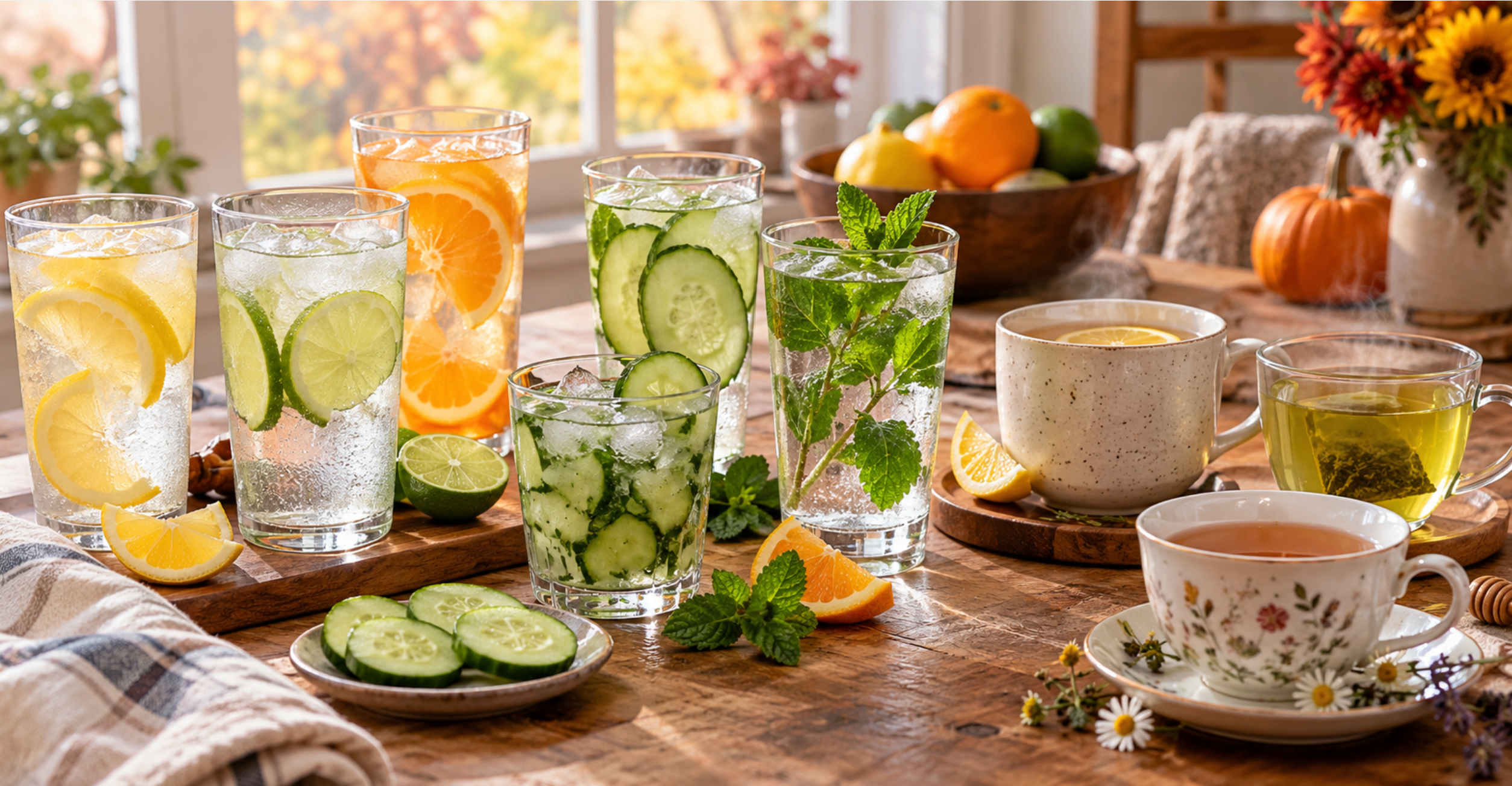
By November, a tall glass of ice water may have lost some of its appeal. Cooler weather, less time outdoors and quieter days at home can make drinking several glasses of water every day feel surprisingly tedious. For older adults, however, maintaining regular fluid intake remains important because thirst can become a less dependable reminder with age.
Fortunately, good hydration does not require repeatedly forcing down large glasses of cold, plain water.
The European Society for Clinical Nutrition and Metabolism (ESPEN) recommends offering older adults a range of hydrating drinks according to their preferences. Its geriatric guideline also encourages attention to how and when someone prefers drinks to be served.[1] The British Dietetic Association gives similarly practical advice: drink “little and often” and choose drinks at the temperature you prefer.[2]
Here are some ways to make that easier.
Try Smaller Servings More Often
A huge glass can look like an assignment. A smaller glass several times during the day may feel much more manageable.
Keep water within easy reach and connect drinking with things you already do. Have some with breakfast, medications, lunch, an afternoon book or television program, and dinner. NHS guidance for older adults specifically recommends using medications, television programs and other routine events as drinking reminders.[3]
Give Water Some Flavor
Plain water does not have to remain plain.
Try:
A squeeze or slice of fresh lemon
Lime wedges
A slice of orange squeezed directly into the glass
Cucumber slices
Lightly muddled cucumber
Fresh mint
Fresh mint combinations with lemon, cucumber, etc
Muddling cucumber or mint releases more flavor without turning the drink into something sugary.
The purpose is simple: make the water more enjoyable. ESPEN specifically includes flavored water among appropriate hydrating drinks for older adults.[1] NHS guidance also suggests adding lemon slices to make water more appealing.[3]
Warm It Up
Cold water may sound wonderful in July and considerably less inviting in November. The British Dietetic Association recommends choosing drinks at whatever temperature you prefer, including hot, cold or room temperature.[2] ESPEN also recognizes hot tea as a source of fluid.[1] Warm water with lemon can be pleasant on a chilly morning. Decaffeinated green tea or a familiar caffeine-free herbal tea can provide another warm option. Choosing several different drinks during the day may also keep hydration from becoming monotonous.
Put the Drink Where You Are
Accessibility matters, particularly for someone with limited mobility. ESPEN identifies physical access to drinks as one of the barriers that can contribute to inadequate fluid intake among older adults.[1] A small glass on the side table beside a favorite chair may be more useful than a pitcher sitting across the kitchen.
Make Hydration Social
Offering someone a drink can work better when you have one too. The NHS advises caregivers to offer drinks regularly and even share a drink together.[3] ESPEN notes that studies involving social interaction around food and drinks have shown promising effects on fluid intake as well as quality of life.[1] For an adult child concerned about a parent’s hydration, sitting down together for a cup of decaffeinated tea might accomplish more than another reminder from across the room.
Find a Routine You Can Live With
Older adults do need to pay attention to hydration, even when they are not particularly thirsty. That does not mean every glass needs to feel like medicine. Smaller servings, preferred temperatures, a little fresh flavor, easy access and regular routines can make adequate drinking much less burdensome.
Anyone who has been instructed to restrict fluids because of heart, kidney or another medical condition should follow the individualized guidance of their healthcare provider.
Hydration works best as an ordinary part of the day. If the water tastes good, feels good and happens almost automatically, staying hydrated may feel a lot less like a chore.
REFERENCES
Volkert D, Beck AM, Cederholm T, et al. ESPEN practical guideline: Clinical nutrition and hydration in geriatrics. Clin Nutr. 2022;41(4):958-989. doi:10.1016/j.clnu.2022.01.024.
British Dietetic Association. Hydration in older adults. BDA Food Fact Sheet. 2022.
Cumbria, Northumberland, Tyne and Wear NHS Foundation Trust. But First, A Drink: Information Leaflet for Older Adults. NHS Foundation Trust.